|
Ref : 1287
A very good and interesting violin
|

go to Home Page see more Violins |
Of the many hundreds of violins I have dealt with in this dealership over the past 26 years - including some of the finest violins to have emerged in South Africa - this violin certainly outplays the very best of them and ranks amoung the 4 or 5 best instruments I've played on.The tonal properties of this violin define it as essentially a concert instrument suited for high-end solo and recital work. It speaks with ease, clarity, power and projection, yet allows for subtle colour gradations and intimacy. This is one of those violins you can't put down once you've started, and you keep going back to it.
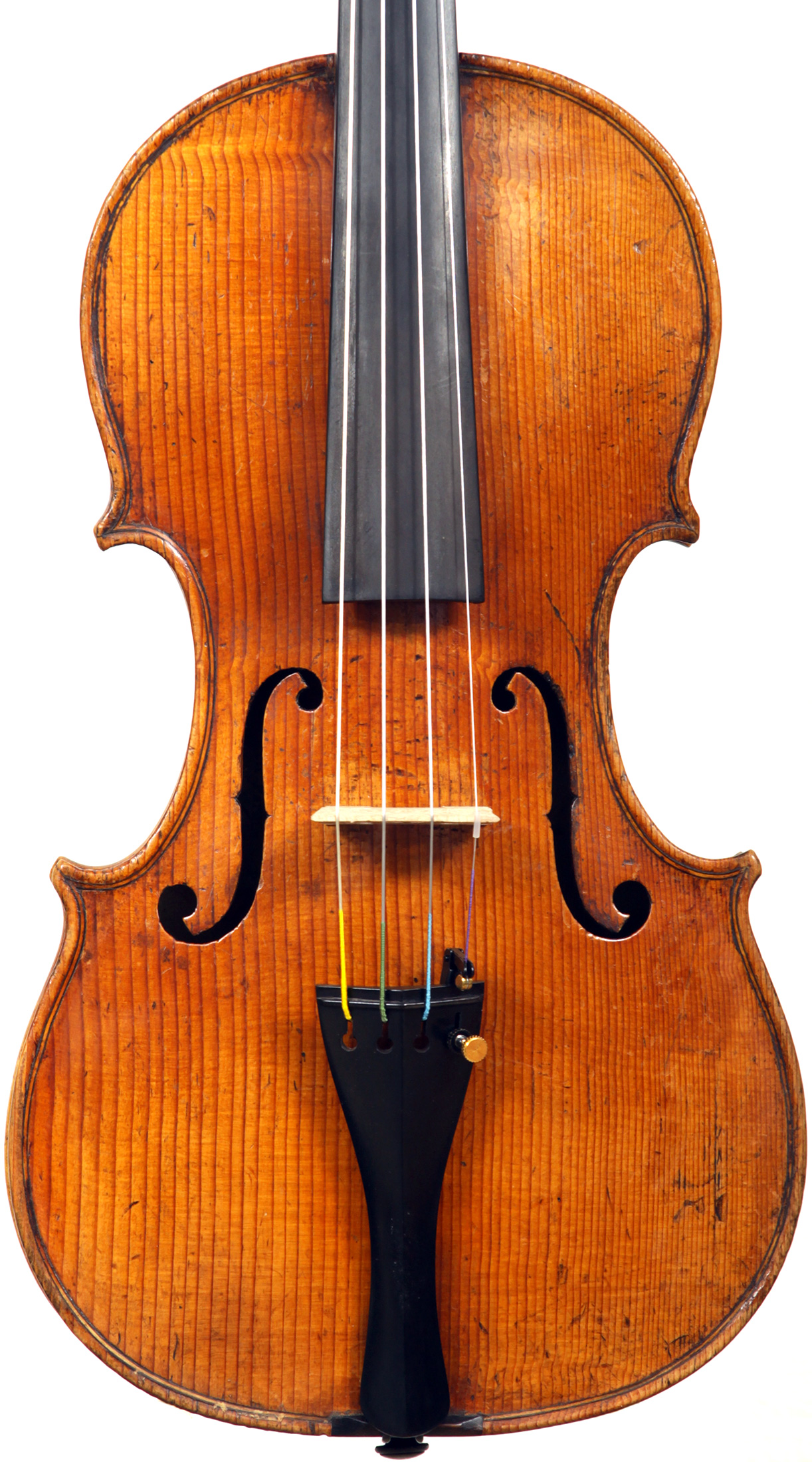
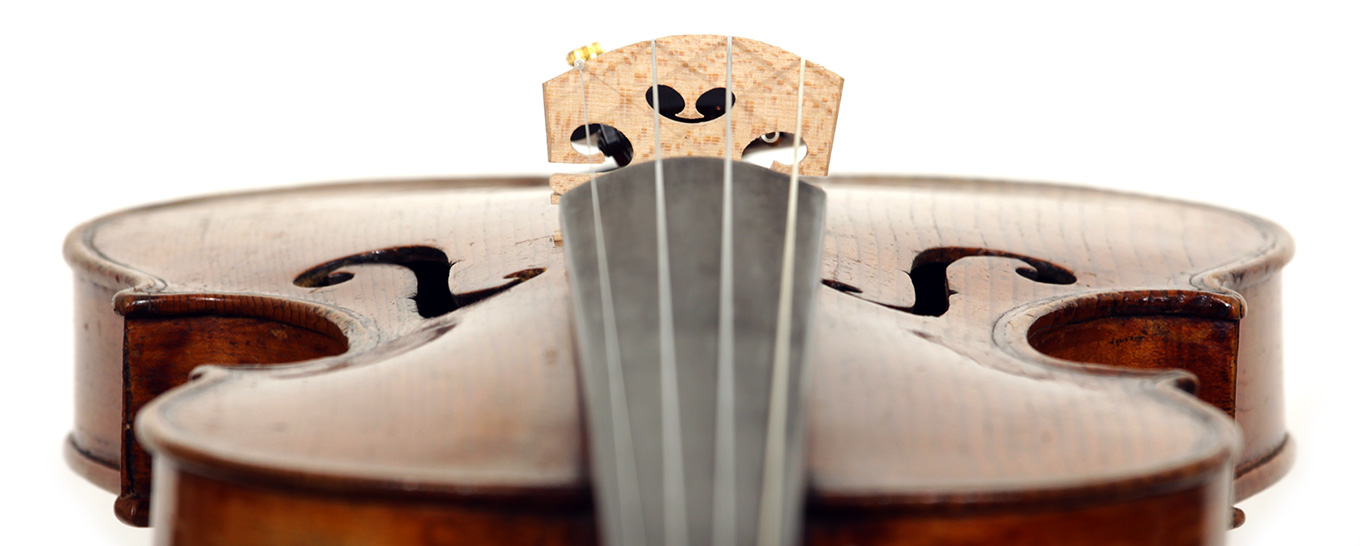
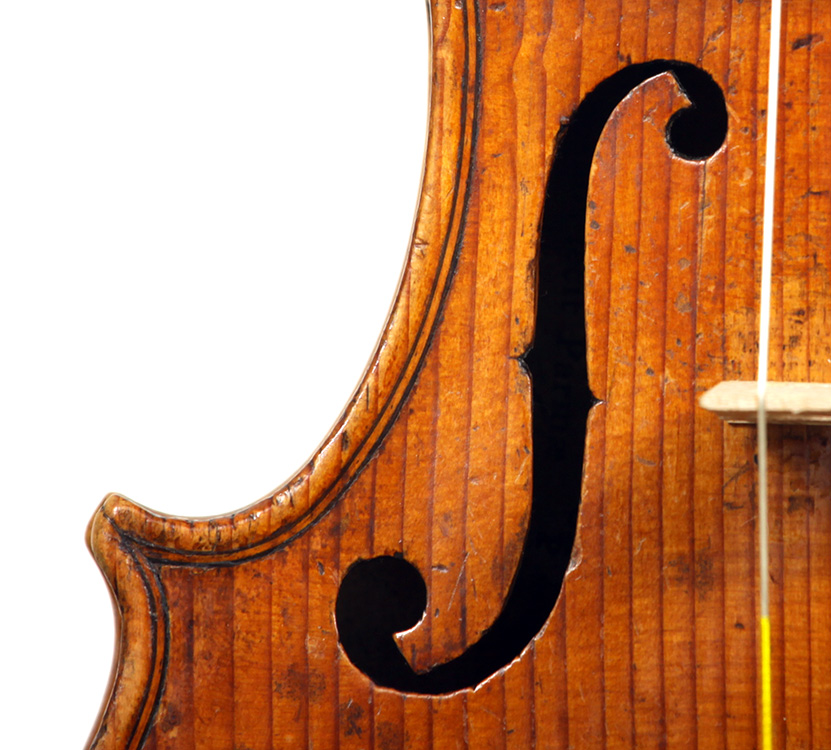
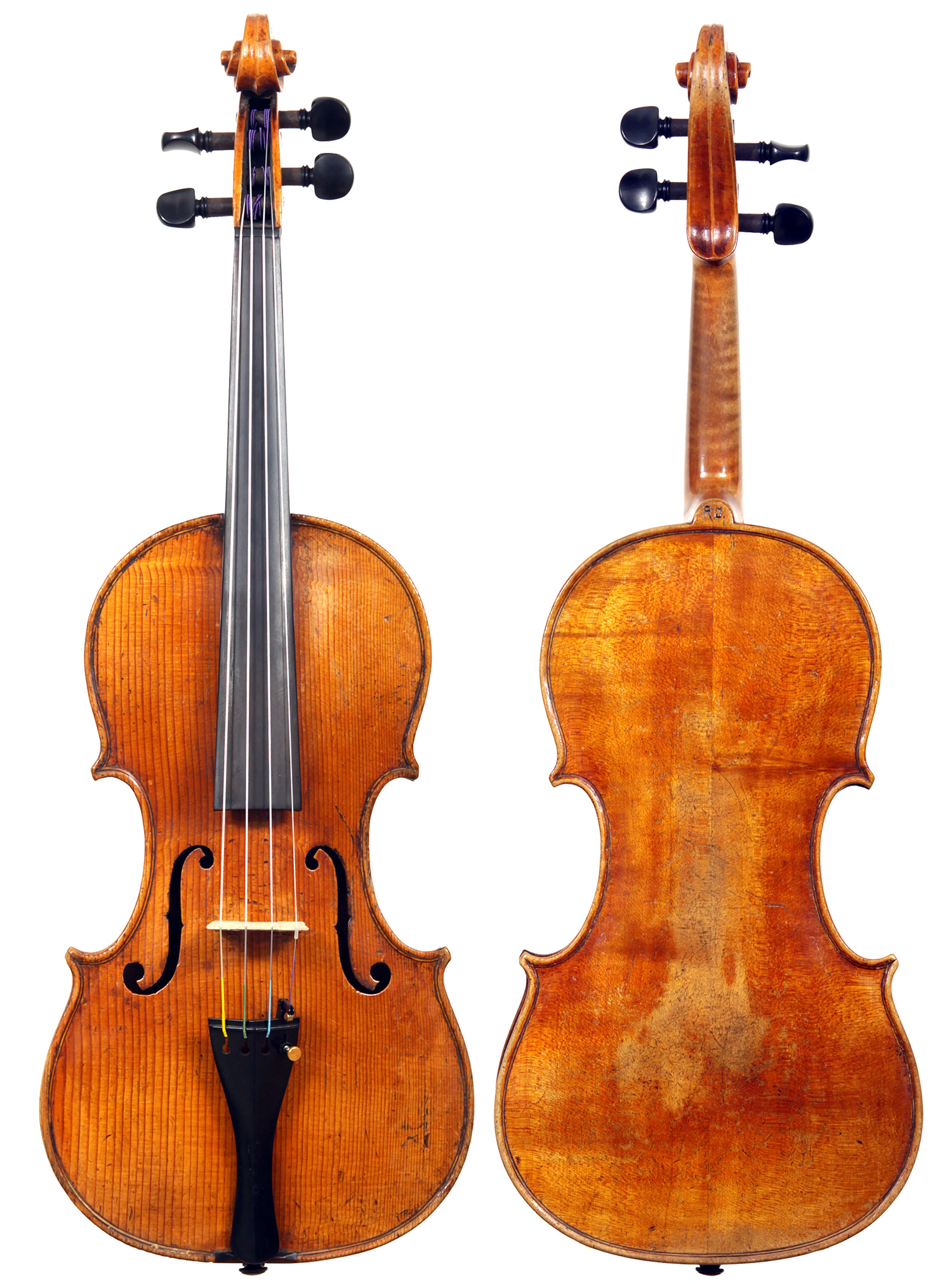
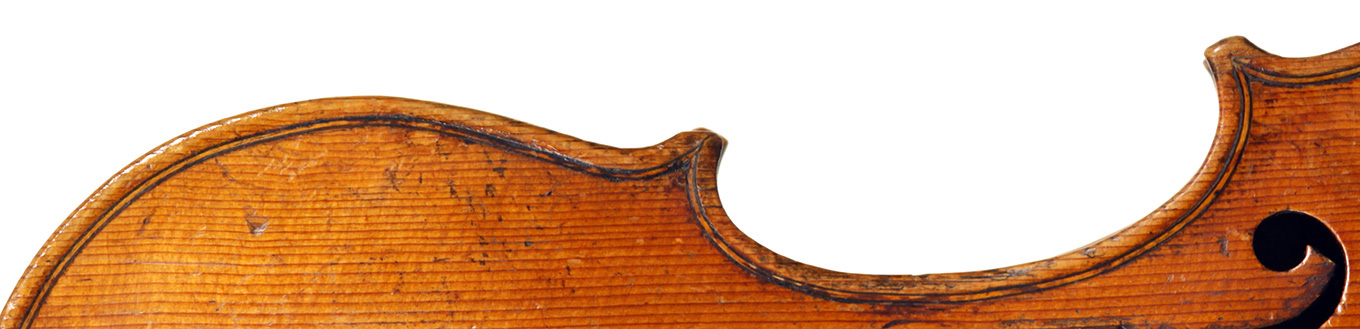
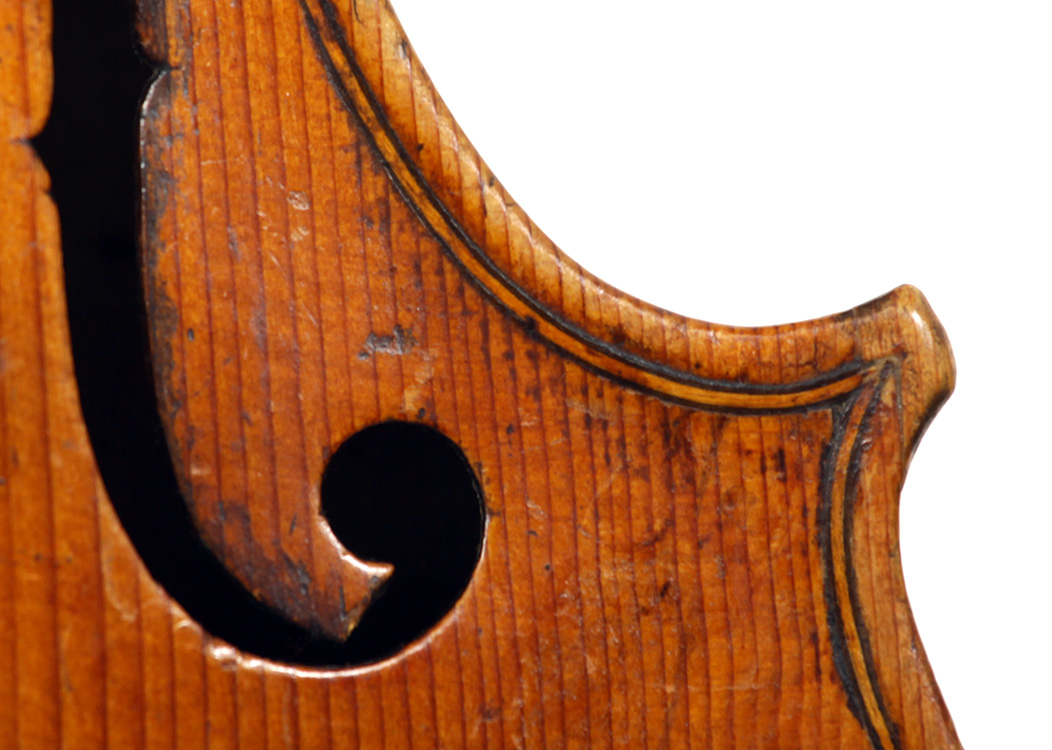
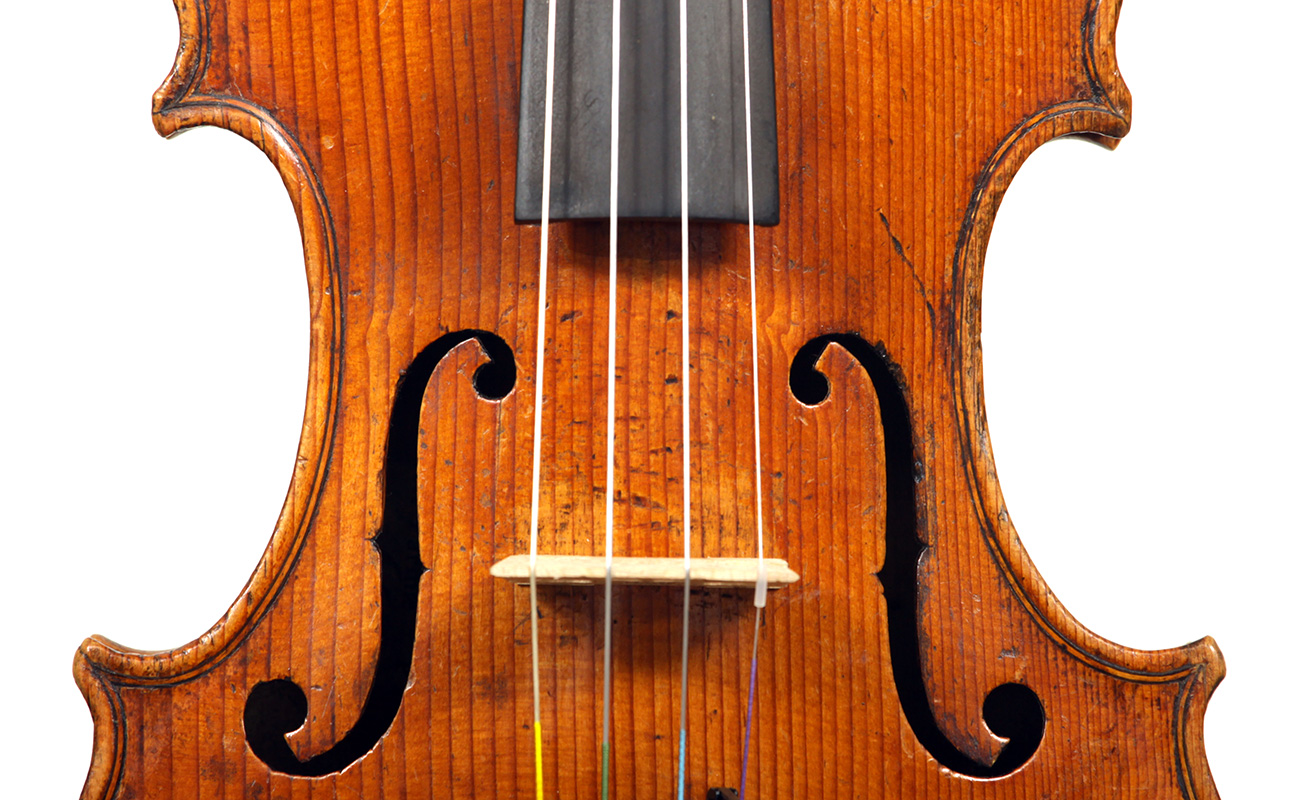
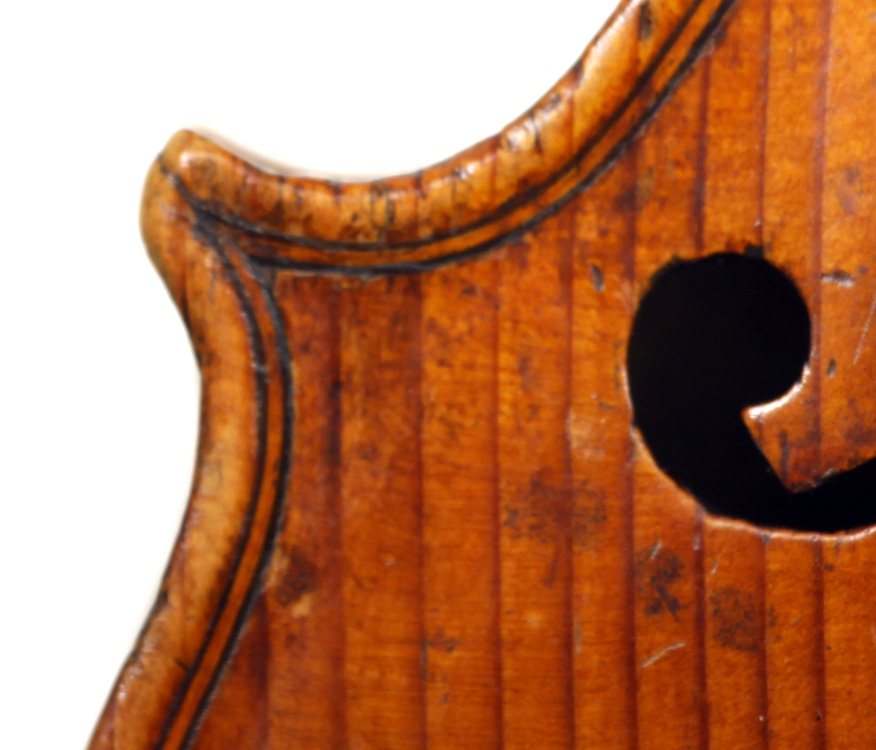
It's clearly a copy of the work of G B Guadagnini from his Piacenza period (1740-1750). This is evident in its overall dimensions (back length: 353 mm), its modelling and other details such as F-hole shape and notches, which is purely Guadagnini. The Guadagnini label in it is fake, but was certainly intended to point at its roots. However, at this time this violin remains of unknown authorship.
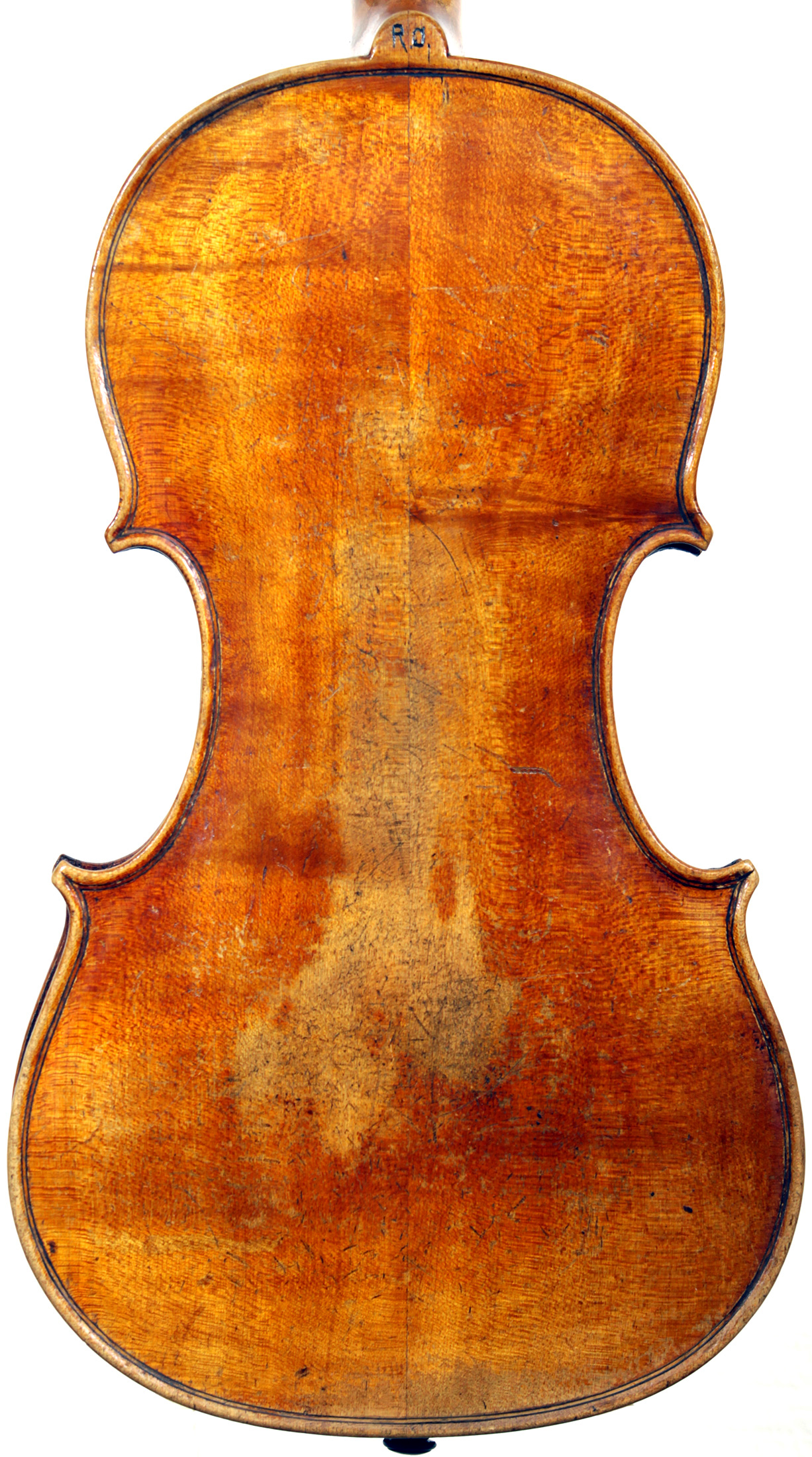
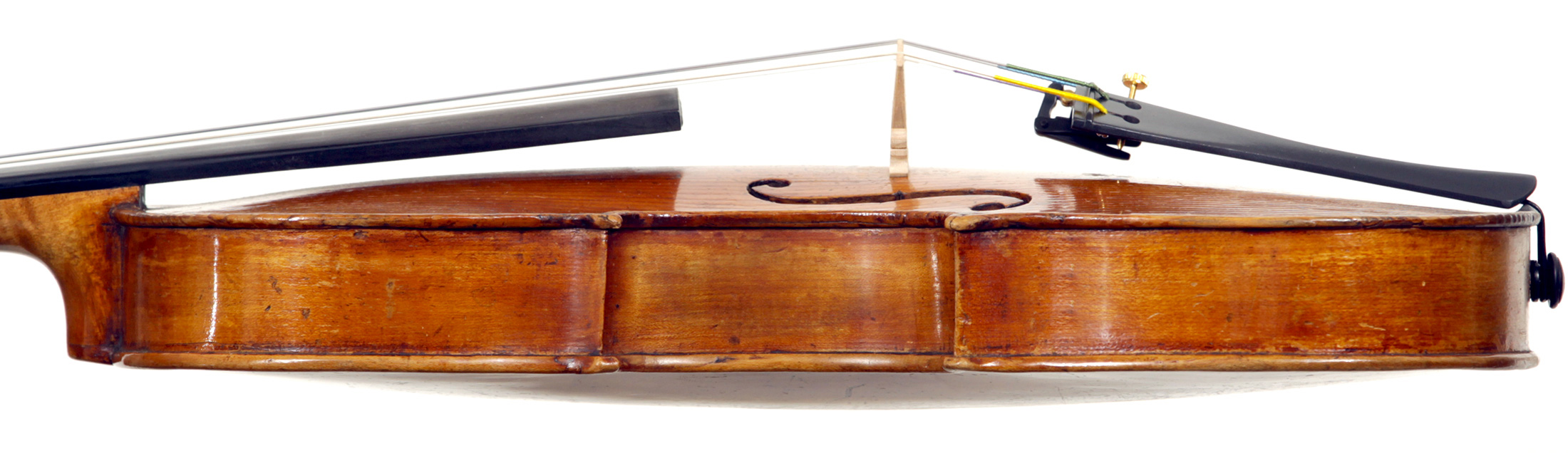
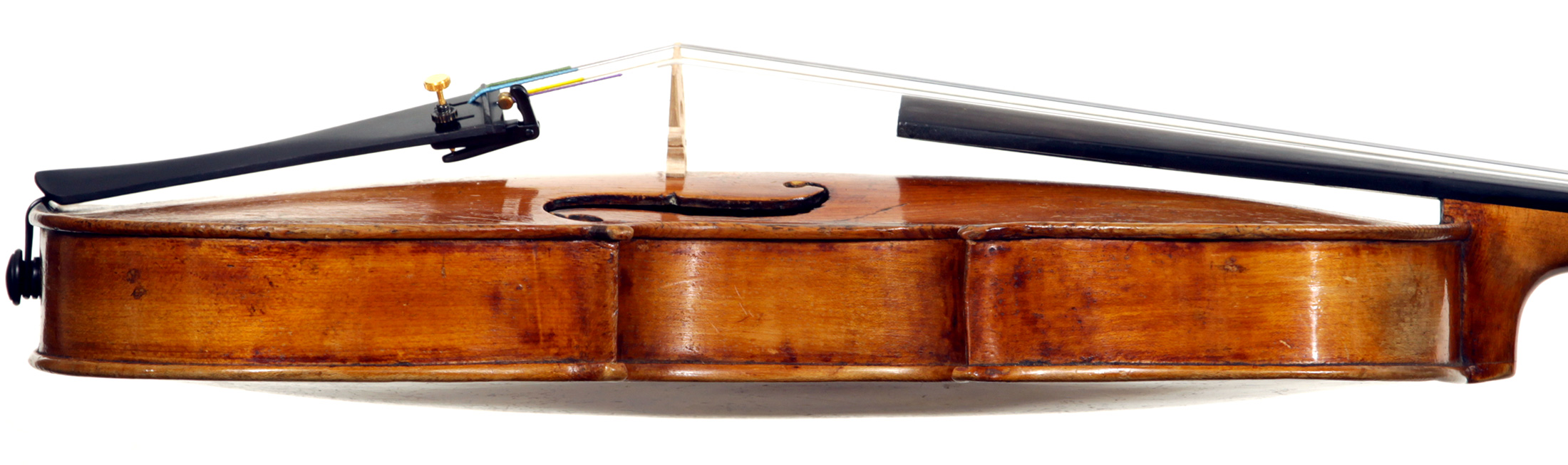
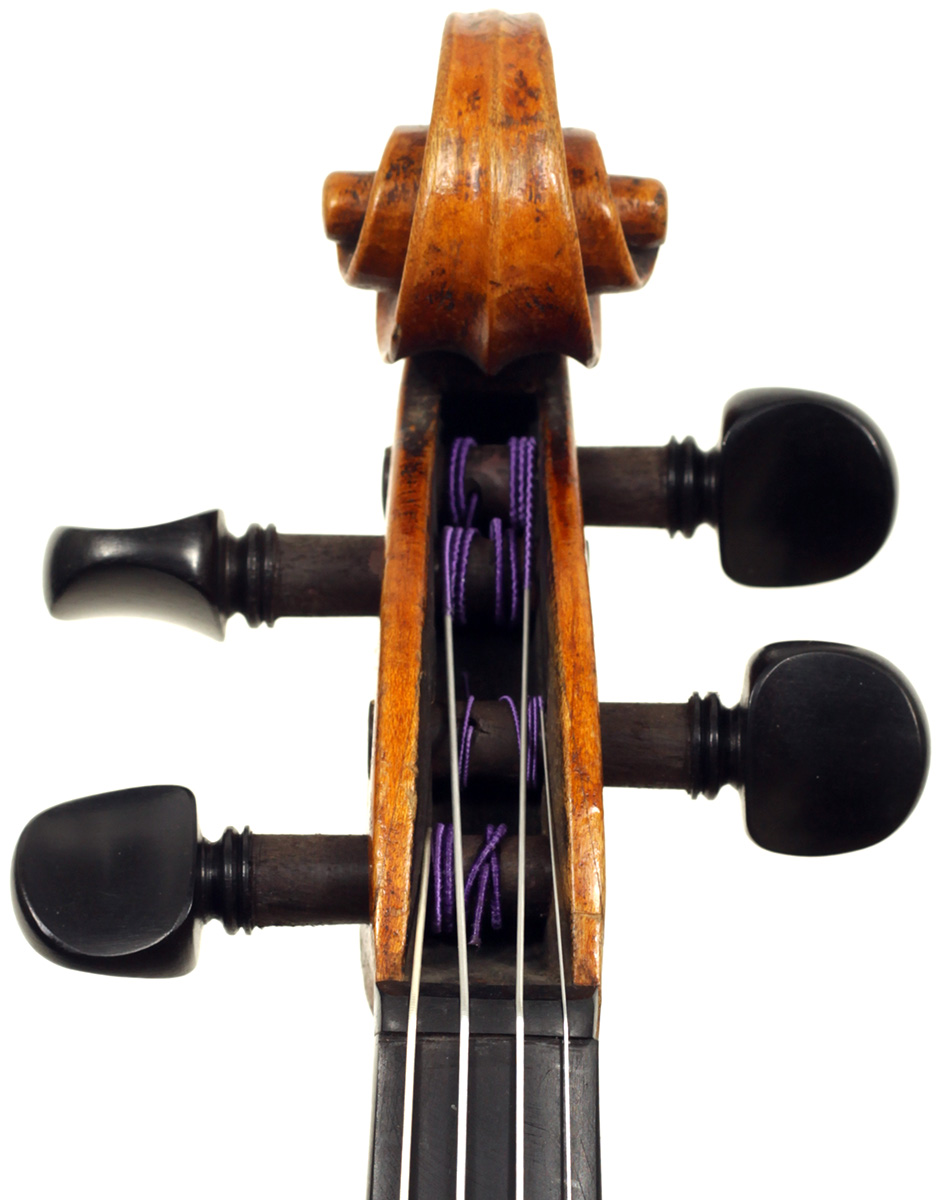
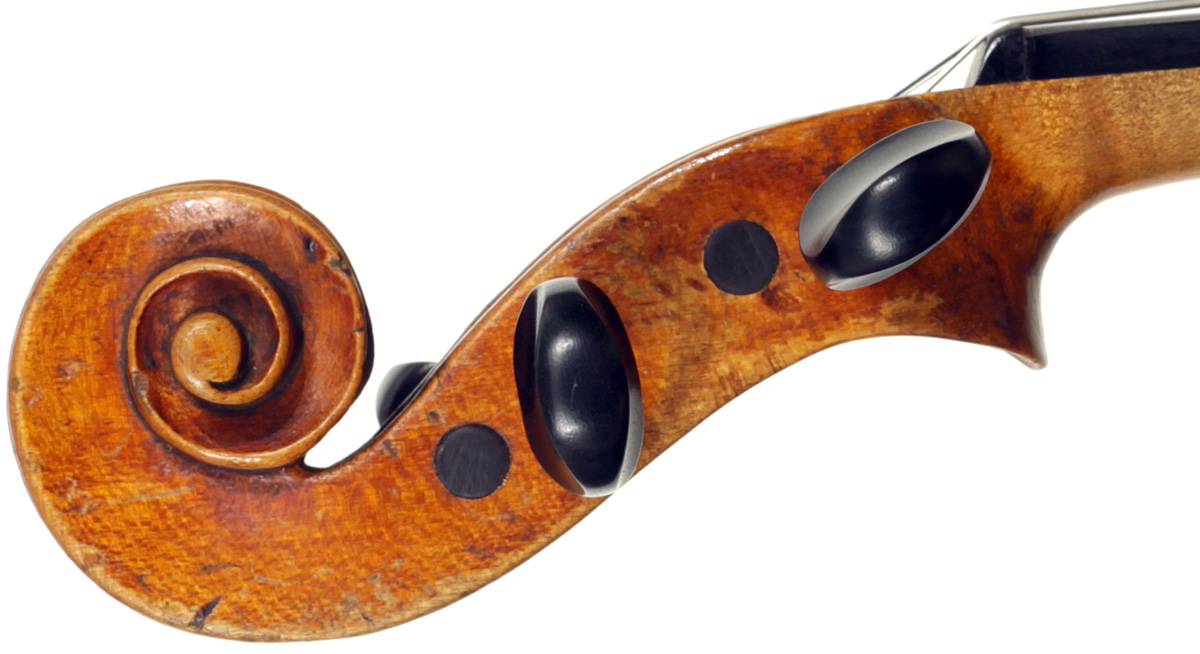
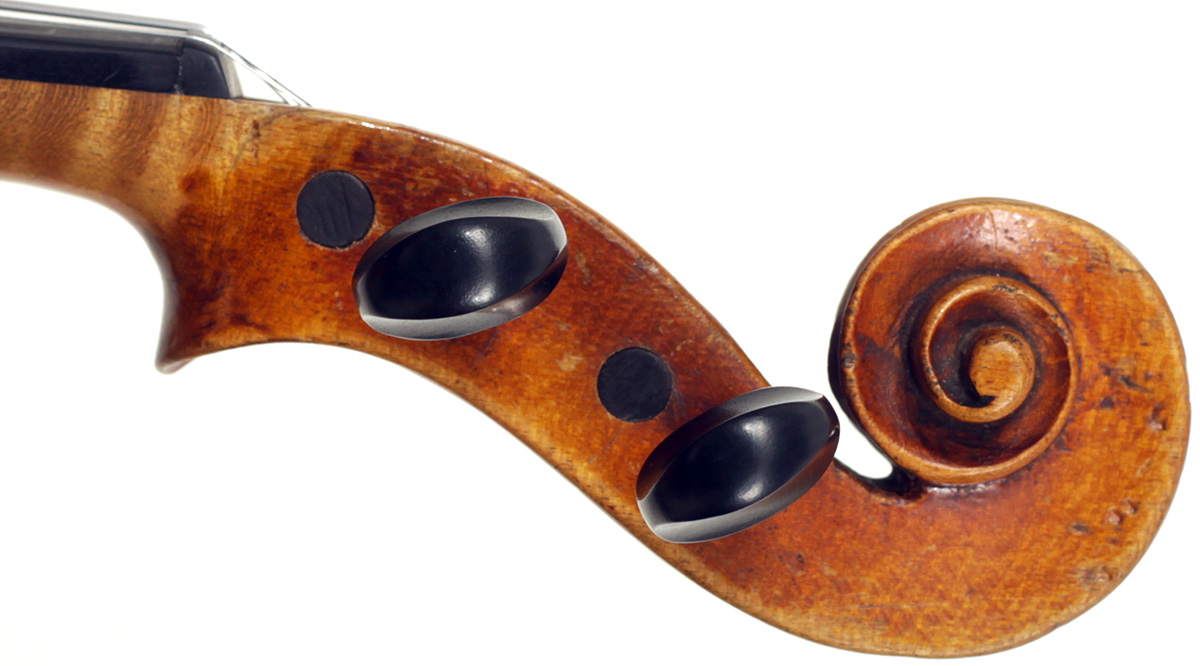
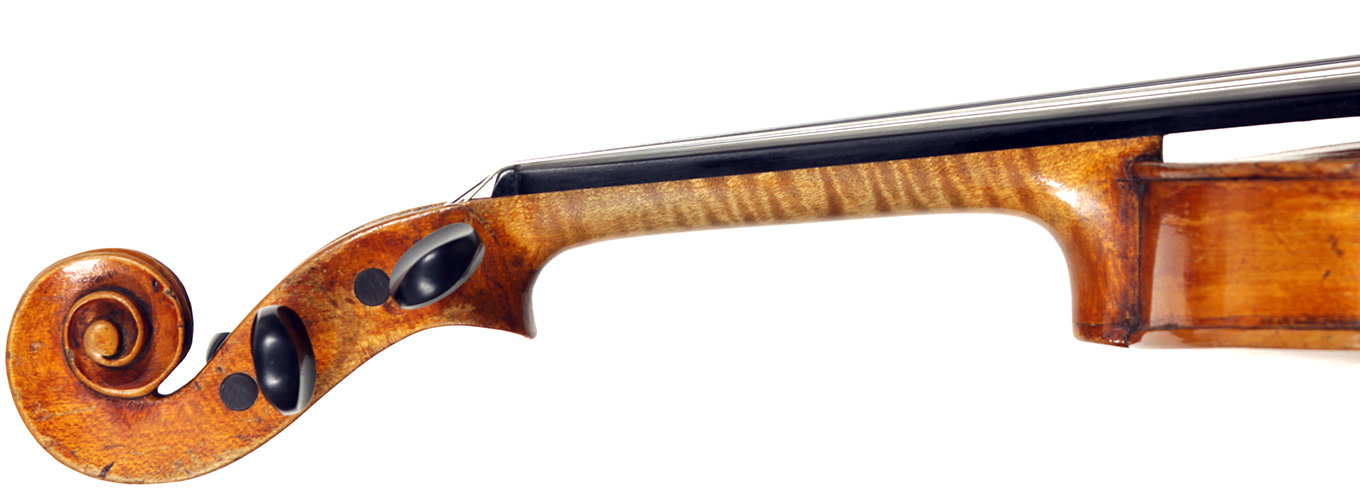
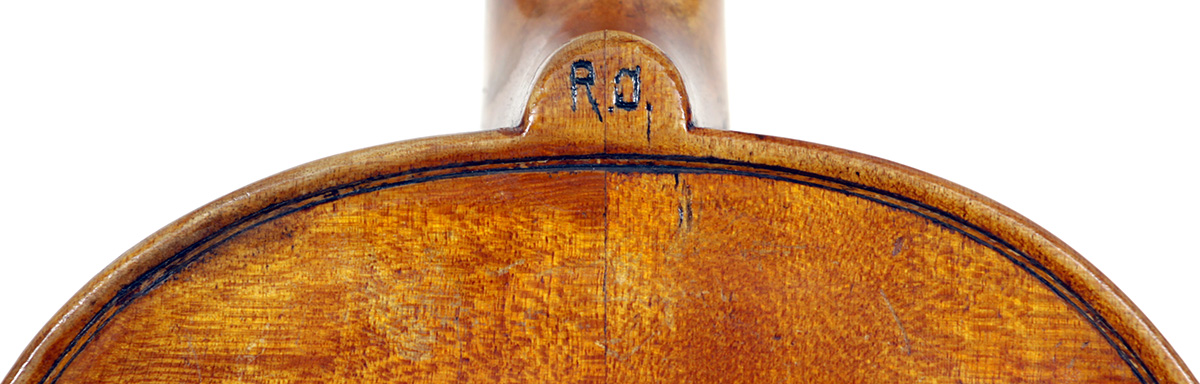
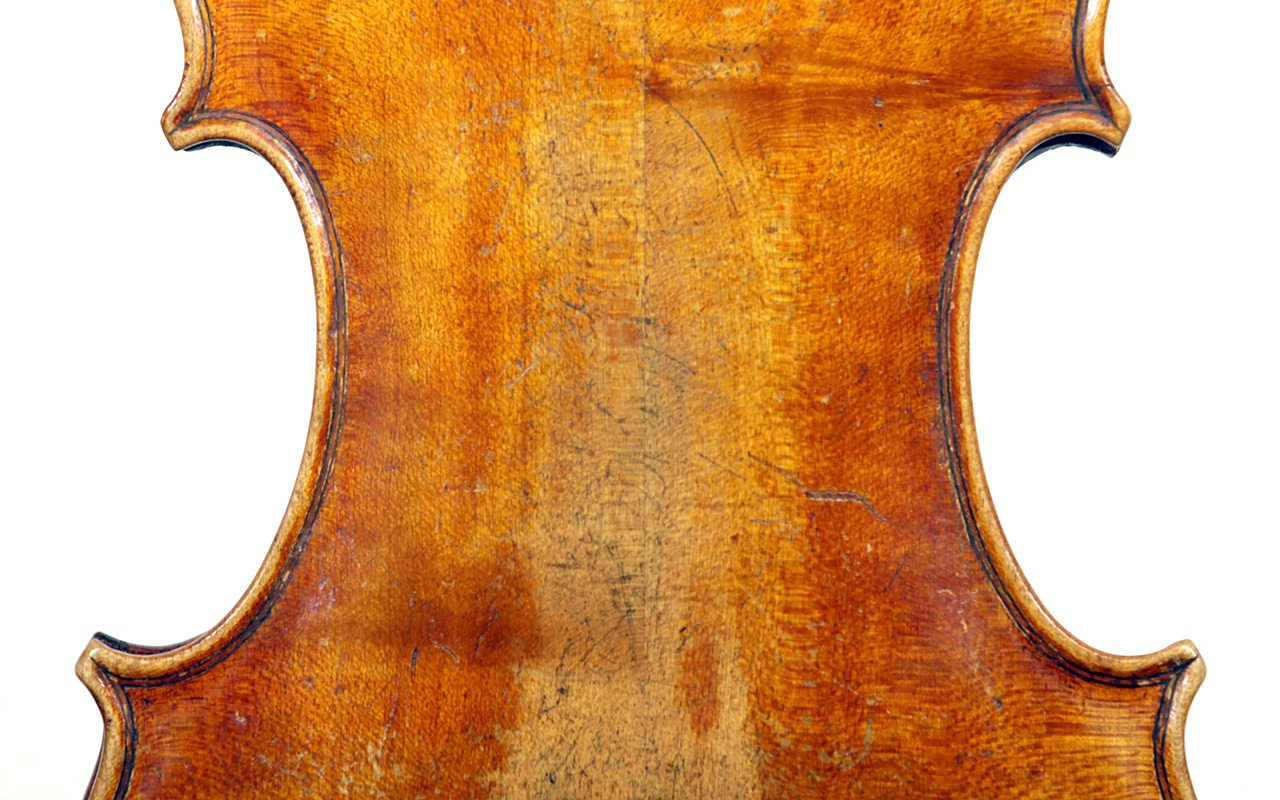
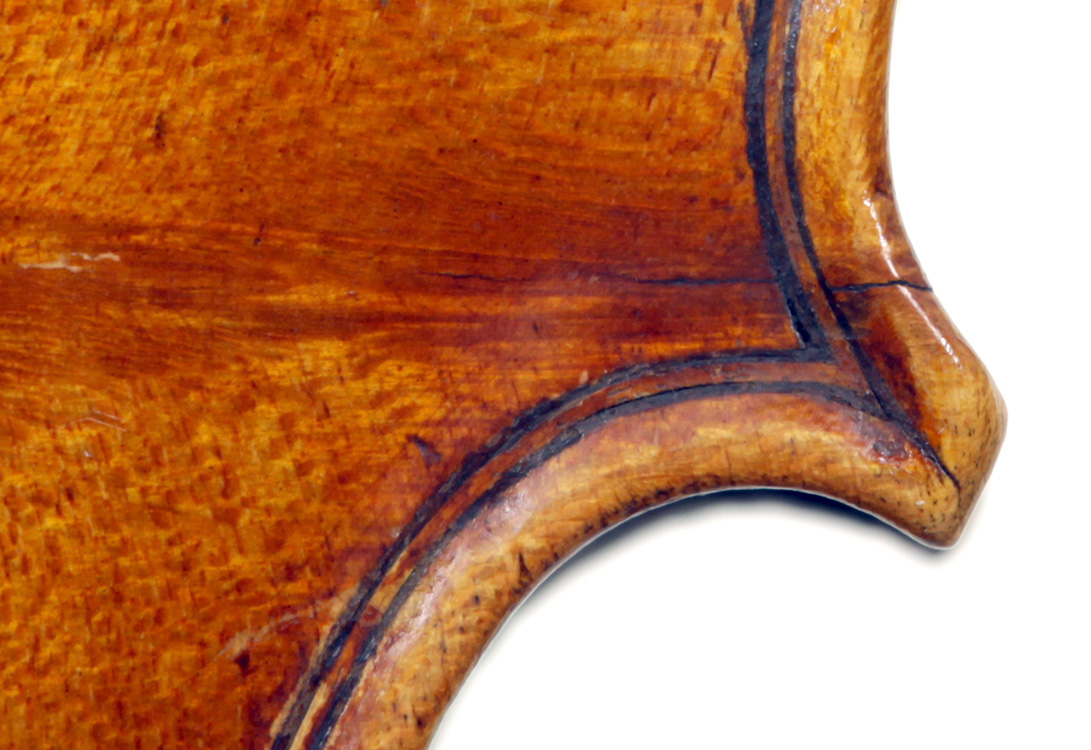
Much about this instrument intrigues: according to the foremost dendrochronologist, Peter Ratcliff, it was made after 1850, yet it has a perfectly executed neck graft (one of the best I've seen). This violin bears signs of much use, but is virtually in perfect structural condition. Furthermore, the central strip in the purfling appears to be of baleen (whalebone).
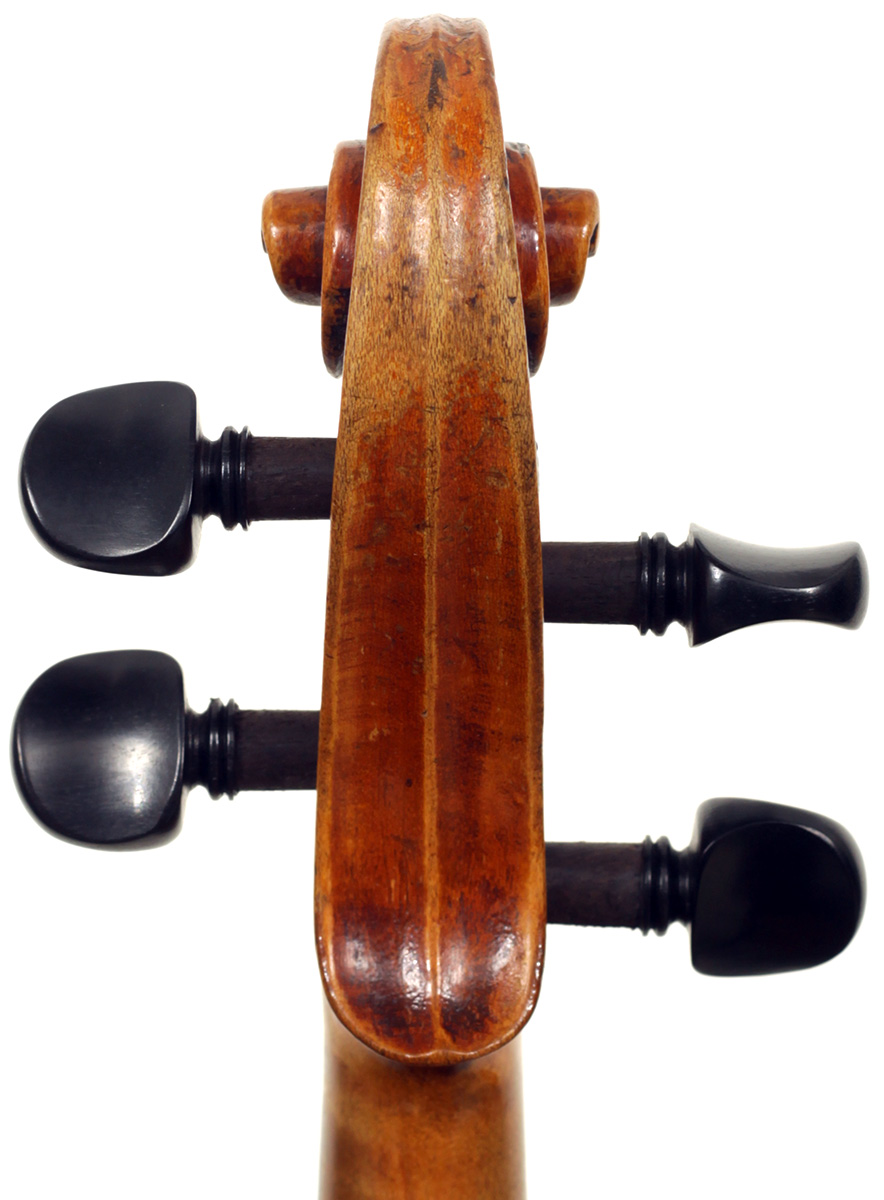
The light golden varnish on this violin, with a tinge of amber, is truly appealing. One is struck by the top, which is of unusually broadly grained tone spruce, crafted from a single piece of wood, with wide grain in the bass flank narrowing to the treble side. Furthermore, the back, ribs and scroll are of very plain maple, evidently slab-cut.
This violin speaks with the greatest ease and is an absolute pleasure to play. It would suit any serious violinist looking for a career instrument.
 |
 |
 |
||
 |
Dimensions : Length of back: 353 mm
Upper bout: 164 mm
Middle bout: 108 mm
Lower bout: 203 mm
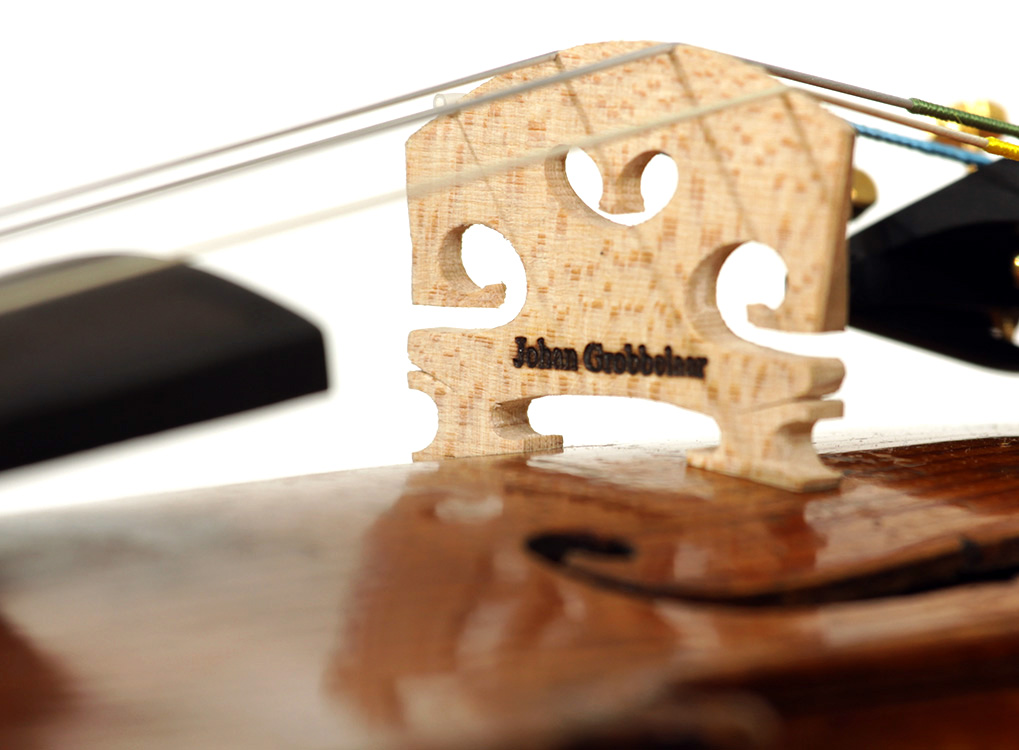
Condition : This violin's superficial wear patterns and other marks in the usual places add to its character. Yet, it is completely free from cracks or serious repairs and is structurally in superb condition. It has a old neck graft (superb) and recently got new ebony pegs and a fresh setup, including new bridge and Dominant strings.
Provenance : The property of Johan Grobbelaar
Price : On request
 |
 |
 |
 |
 |
 |
 |
 |
 |
 |
 |
 |
|||||
 |
 |
 |
 |
